Playing Beyond Gaming
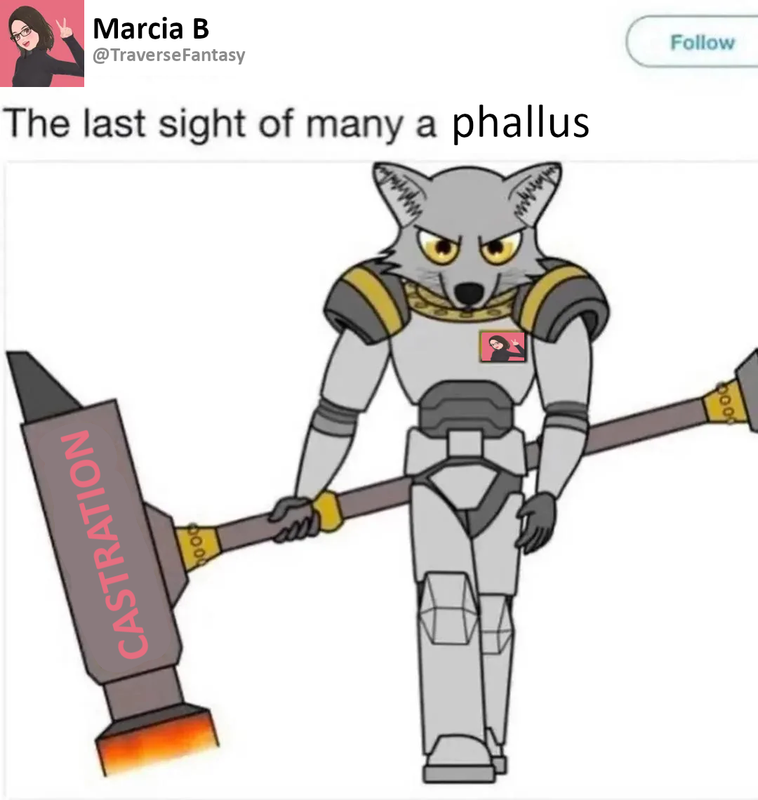
Gee, it sure is boring around here—
DISCLAIMER
The author wrote this article out of her interest in this hobby, and also to synthesize this with her other interests in literary, mathematical, or political theory. Any criticism in this article was written in pursuit of that interest, and it is not intended as ammunition in factional disputes nor as a personal denouncement of the individuals whose works are being criticized. The author also has no interest in petty arguments on any topics discussed in this article.
—aw. Okay. Ugh. I hate when that happens.
One summer in college, I took an online STEM Ethics course because it’s the sort of thing required by the school to be like, “We’re not just training anti-social freaks.” Because I’m a different kind of freak, obviously, I wrote my final as a critique of the course’s overarching ideological framework. Stakeholder theory is an approach to business management that a firm must not only consider shareholders in its decision-making, but also everyone who is potentially impacted by the firm’s activity. I argued that shareholder theory does basically nothing but give the firm an alibi to do what it already wanted to do anyway, and that it is ultimately a dishonest framework that obscures the firm’s own intrinsic interests and thus its relationships with society at large. At least shareholder theory is honest! It holds firms accountable by situating them within the social antagonisms they must navigate in order to exist and function. I got an A+ on that shit but, although I meant every word, I can only imagine the professor understood my paper’s implications differently.
Seraphina wrote on (what I think is) a similar topic at Dice Exploder. The Forge loved their taxonomies, and one seemingly meant to complement their most famous game-narrative-simulation triad is called stance theory (see also Socratic Design) which categorizes how a player approaches a game. There’s actor stance where the player tries to inhabit the POV of the character and acts accordingly; there’s author stance where the character’s POV is secondary to the player’s own pseudo-literary aims; there’s director stance where players dictate the imaginary space even outside their character’s means of interaction; and most importantly to our case is pawn stance, similar to author stance except the character acts not to develop a theme or story but to pursue the formal goals of the game. Pawn stance is probably the most common in OSR spaces, and is also probably the “old-school” aspect of the OSR if we consider it not just a return to older editions of Dungeons & Dragons but to the specific vision of play (semi-legendarily) originated by Gygax—remember that the main difference between the first and second editions isn’t in the formal ruleset but in the presumed play-culture of the audience.
I’ve discussed at length the implications of pawn stance, if not by that name, for the OSR. The character is instrumentalized towards the player’s desire to succeed at the game, which is structured in turn to provide goalpost after goalpost for the player to accomplish. The setting reinforces the play-structure by invoking a mishmash of mythic underworld and wild west motifs which communicate themes of endless expansion, boom-and-bust, and overcoming a vast primordial ‘Other’ The player is then discouraged from inhabiting the character’s perspective, from ascribing motivation beyond D&D’s procedural cycles, or from overstepping the character as the player’s interface with the world of the game—not because this is necessarily forbidden by D&D as a formal ruleset, though some OSR texts do take pleasure in prescribing against (what one might call) play-beyond-the-game, but because it’s not generally sanctioned by the play-culture. Gygax himself understood the pleasure of games as being only derived by what later Forge authors would label as pawn stance, and understood this pleasure as fundamentally masculine, with “LARPing and theatrics and csocialization [sic]” being characteristic of “females” who almost can’t help but distract themselves from actually playing the game. He even told off his three daughters for playing the game wrong, at which point they’d lost interest because what they had enjoyed was indeed not the game as such but the framework it provided them for imaginative play-pretend. Being ignorant of stance theory, how I described Gygax’s approach towards play (and his seemingly general experience of subjectivity) was phallic: not because he was chauvinistic or sexist, though he was, but because his experience of D&D and the pleasure he derived from it was through striving against the game in order to accomplish its prescribed goals. That is how men are socially conditioned to view not just play but also sex and work and politics and so on.
Seraphina argues in her article that pawn stance is “objectively correct” for two reasons. First, the three other stances can result in dissonance with the game in as much as they distract from attaining its object, so any other stance of play needs to align with a more base pawn stance to maximize pleasure by reducing that dissonance (perhaps Lacan was right in suggesting that surplus value is the same thing as surplus pleasure, since in both cases we have to worry about how the way in which we realize that value may subtract from the final product, which any good capitalist or neurotic would then strive to reduce). Second, in as much as any stance reduces to pursuing a goal, they each already reduce to pawn stance with respect to a different goal if not one explicitly prescribed by the game. Never mind that the distinctions made by stance theory are less about player’s different goals than about different frameworks of player agency (what they can manipulate in the imagined space, by what means, and why they can do so). I agree that in as much as our hypothetical player is actually striving to be a good actor or good author or good director, definitely, that player’s experience reduces to pawn stance with respect to a ‘game’ other than the one being consciously played (i.e., some hypothetical director-player is playing a director game rather than playing D&D as D&D).
I disagree in that Seraphina is reducing the scope of possible experiences of play, though not in the way she knows she is doing semi-ironically by flattening stance theory into one unified theory of pawnhood. Stance theory distinguishes player-game interfaces, but I’m more concerned with player experience or enjoyment, which Seraphina also seems to be. I’ve suggested forever ago that Lacan’s discussion of fantasy is useful to understand how different players derive different enjoyments from the same activity. The phallic-neurotic fantasy is here only one possible structure: when the neurotic subject is situated within a symbolic system, they take the position of the lacking subject pursuing the object they’re made to think they lack within that system. I put it as: “Hesiod desires cereal and children. [D&D] players desire gold pieces. Straight men desire tits. It has little to nothing to do with the literal nature of [the object]; it’s all about the discourse [i.e., symbolic system] and why that object becomes desirable.” Obviously this structure of desire and pleasure is especially pertinent to the study of games, which situate players inside a symbolic system to occupy a specific subject-position and act within that scope. It’s also what allows us to ask (and answer!) questions about a game’s prescribed activities, whether about a formal ruleset or about a play-culture that interprets (and often transforms) it.
But the drive one may label as neurotic or phallic is not the final word on playing games or deriving pleasure from them. I refer to the fantasies of whom Lacan calls the hysteric and the pervert in the previous article, and they’re useful to understand e.g. a participant who elides their own subjectivity in favor of self-objectification (the hysteric) or one who presupposes the desire of others (the pervert), but perhaps more useful as direct contrast to phallic pleasure (a.k.a. jouissance) is what Lacan refers to as feminine pleasure. Irigaray opens This Sex Which Is Not One by musing on female sexuality, the plurality and blurring of erogenous zones, in contrast to the male system which not only centers on the penis as primary zone but on the act of climax. This functions as both metaphor and etiology of feminine contra masculine pleasure, having neither primary function nor final teleology. It’s not that the feminine subject doesn’t participate in or derive enjoyment from phallic drives necessarily; in fact, rather than being mutually exclusive, we understand feminine pleasure as a complement which unlocks enjoyment beyond the confines of the phallus (in which, mind you, women also participate; the phallus needs them after all, as much as they also seem to get in the way). In the context of playing games, or really of play in general, we can understand that there is pleasure beyond the playing of the game as such, without having to model it as another hidden game which the player strives to win for themselves. Gygax understood this and considered it a lesser pleasure, basically in the same way as Freud and others considered female sexuality to be a confused distortion of the male.
Pleasure beyond the game may be outside the scope of a game—definitionally, obviously, it has to be—and that may lead to its being considered irrelevant to the discussion of how games or even cultures structure player behavior differently. But as for the experience of play inside (or outside) a game, one would miss a leg of the elephant by ignoring pleasure beyond the game or reducing it to the same structure. This is what Gygax amongst others have done historically because they couldn’t see past their own nose (joke is too obvious) and didn’t respect approaches towards play that weren’t objective (whether with respect to the “objectives” of the game, or in terms of being basically immeasurable). Meanwhile, when I read his own account of how his daughters played D&D, I instantly related to them and even took notes. “Oh yeah, it sounds fun to describe what treasure you find—oh wait, that’s what we did in Trophy, innit?” It’s not that the game doesn’t matter, but that there’s always more to the game than the game, and it sucks that even in woker subcultures the shadow of the phallus remains because the underlying conditions of the discourse are no different than those which Gygax (for all his faults) merely expressed.
Practically speaking, you know, learn to catch a fucking vibe. Don’t be the freak that gets mad when your friends get distracted from playing the game by literally just hanging out. It’s not that they don’t want to play the game or that it’s necessarily just a pretense, which I know I’ve said before to exaggerate this point just because it’s important to me. But for many people, the pleasure of playing a game goes beyond what the game itself can offer, or beyond any hidden games we certainly all play in our head (c’est la vie and all that shit). There’s pleasure in playing beyond gaming. There’s pleasure beyond the phallus.
Oh uhhh this is part of the player advice bandwagon. Why not?


Comments
Post a Comment